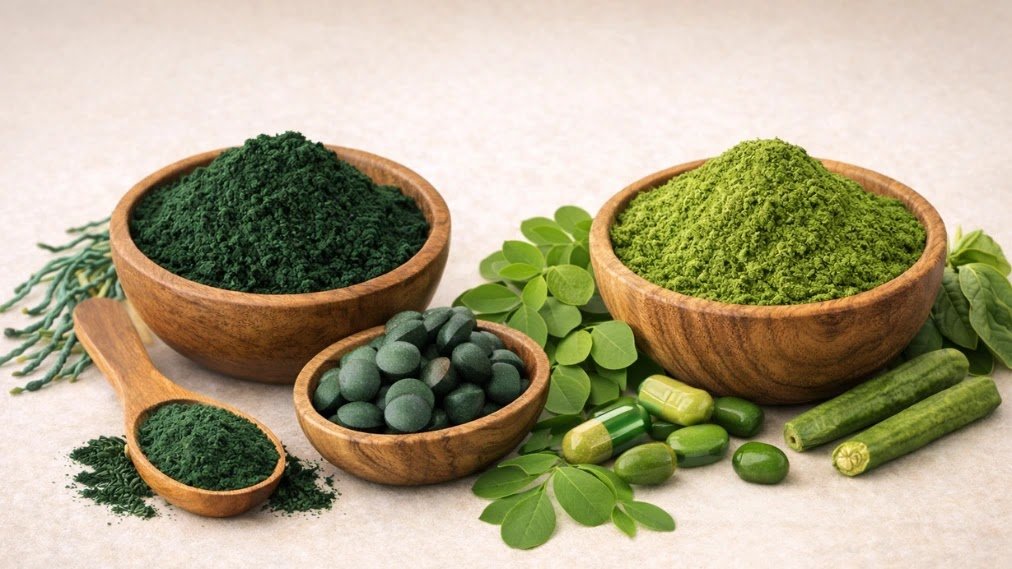
Discover the key differences between spirulina and moringa. Compare protein, vitamins, benefits, and side effects to choose the perfect superfood for your health goals.

Introduction
Listen, I get it. You’re scrolling through your favorite health influencer’s feed, and suddenly you’re seeing spirulina smoothie bowls and moringa lattes everywhere. Both are being hailed as miraculous superfoods that’ll transform your life, boost your energy, and basically make you feel like a wellness superhero.
But here’s the thing—they’re not actually the same thing, and pretending they are? That’s like saying kale and spinach are identical just because they’re both green. They’re both amazing in their own ways, but they work differently in your body.
I’ve spent way too much time diving into the nitty-gritty of these two nutritional powerhouses, and I’m here to break down exactly what makes spirulina vs moringa different, which one might be better for your specific goals, and whether you even need to choose just one.
Ready to become an actual expert on this? Let’s go.
What Exactly Is Spirulina? (Spoiler: It’s Not What You Think)
Here’s something that blew my mind when I first learned it: spirulina isn’t actually a plant. It’s blue-green algae. Yep, you read that right. We’re talking about a microscopic organism that’s been around for literally billions of years.
What makes spirulina so special is its protein density. We’re talking about 60-70% protein by dry weight—which is absolutely bonkers compared to pretty much any other natural food source. To give you an idea, chicken provides roughly 31% protein, and beef about 26%. That’s why fitness enthusiasts and vegans absolutely lose their minds over this stuff.
But it’s not just the protein that makes spirulina interesting. It’s packed with phycocyanin (that blue pigment that gives it its signature color), B vitamins, iron, and amino acids your body can’t produce on its own.
The catch? It tastes like the ocean had a baby with a swamp. It’s got this strong, sea-like flavor that takes some getting used to. Many people find it easier to take in tablet form or blend it into something sweet where you can’t really taste it.
Now Let’s Talk About Moringa (The Leaves That Do Everything)

Moringa comes from an actual tree—the Moringa oleifera tree, to be specific—and it’s been used in traditional medicine for centuries, especially across India, Africa, and Southeast Asia. The leaves are where the plant does its most important work.
Unlike spirulina, moringa’s protein content is more modest at 25-30%, but don’t let that fool you. What moringa lacks in protein, it absolutely dominates in other areas. We’re talking about an incredible range of vitamins including A, C, B vitamins, plus minerals like calcium, iron, and potassium.
Here’s what really sets moringa apart: it’s like nature’s multivitamin. One cup of fresh moringa leaves contains roughly 7 times the vitamin C of oranges. It’s not just noticeable—it’s an incredible difference.
The flavor is also notably different. Moringa has this mild, earthy taste that’s way more approachable than spirulina. It’s almost pleasant, honestly. This makes it easier to incorporate into everyday eating without having to disguise it in a chocolate smoothie.
Spirulina vs Moringa: The Protein Showdown
Let’s be real—if you’re here because you’re trying to build muscle or you’re vegan and worried about getting enough protein, this is probably the comparison that matters most to you.
Spirulina wins this one, and it’s not even close.
A single tablespoon of spirulina powder gives you about 4 grams of protein, while the same amount of moringa powder only provides about 1 gram. Over the course of a day, this difference becomes pretty significant.
| Metric | Spirulina | Moringa |
|---|---|---|
| Protein (per 100g) | 60-70% | 25-30% |
| Per tablespoon | ~4g | ~1g |
| Complete amino acids? | Yes | Mostly complete |
| Best for muscle building? | ✓ | △ |
If you’re serious about protein intake and building or maintaining muscle mass, spirulina is genuinely your better choice. Athletes, bodybuilders, and dedicated gym-goers typically reach for spirulina for this exact reason.
But—and this is important—moringa still contains all nine essential amino acids, making it a complete protein, just in smaller quantities. It’s not a deal-breaker if you’re interested in moringa for other reasons.
Tata 1mg Tejasya Organic Moringa Powder

About this item
- Helps support immunity and natural detox
- Helps weight management and metabolic balance
- Enriched with Vitamin C and antioxidants for daily protection
- Promotes nutrient absorption and better digestion
- 100% natural, free from preservatives and GMOs
The Vitamin and Mineral Battle: Moringa Takes the Crown
Now, if spirulina dominated the protein conversation, moringa absolutely crushes it when we’re talking about vitamin and mineral diversity.
Moringa contains:
- Vitamin A: Roughly 10 times more than carrots (yes, really)
- Vitamin C: Seven times more than oranges
- Calcium: Three times more than milk
- Potassium: Three times more than bananas
- Iron: More than spinach (and unlike spinach, it’s highly bioavailable)
Spirulina, on the other hand, absolutely dominates in B vitamins—particularly B12, which is why it’s such a favorite among vegans. It also contains more iron than moringa and is loaded with chlorophyll and phycocyanin, which are powerful antioxidants.
| Nutrient | Spirulina Winner? | Moringa Winner? | Why It Matters |
|---|---|---|---|
| Vitamin A | No | ✓ | Eye health and immune function |
| Vitamin C | No | ✓ | Immunity, skin health, antioxidant |
| Vitamin B12 | ✓ | No | Energy, vegan essential |
| Iron | ✓ | (Close) | Blood health and oxygen transport |
| Calcium | No | ✓ | Bone strength and muscle function |
| Potassium | No | ✓ | Heart health and blood pressure |
The takeaway? For overall vitamin and mineral diversity, moringa is your superfood. It’s like taking a well-rounded multivitamin, while spirulina is more specialized.
Spirulina vs Moringa for Weight Loss: Which Actually Works?
This is where things get interesting because both of them can actually help with weight loss, just in completely different ways.
Spirulina’s approach to weight loss:
The high protein content is your secret weapon here. Protein is thermogenic, meaning your body burns calories just digesting it. It also keeps you feeling fuller longer, which naturally leads to eating less. When you’re satiated and not experiencing those mid-afternoon energy crashes, you’re way less likely to reach for vending machine snacks. Plus, spirulina’s nutrients help stabilize blood sugar, which means fewer cravings.
Moringa’s approach to weight loss:
Moringa works through a different mechanism. It’s rich in fiber, which again promotes that feeling of fullness without adding massive calories. It also contains compounds that help regulate blood sugar levels, reducing those energy crashes and cravings. And honestly? The antioxidants in moringa support your metabolism and overall metabolic health.
Real talk: if you’re purely focused on weight loss and building lean muscle simultaneously, spirulina edges out moringa. But if you want overall metabolic support and aren’t necessarily looking to maximize protein intake, moringa is genuinely excellent.
Many people actually use them together for this reason—you get the protein and energy benefits from spirulina plus the metabolic and vitamin support from moringa.
Taste and Texture: The Honest Comparison

Let’s address the elephant in the room: spirulina tastes weird to most people.
It’s got this strong, oceanic, almost metallic flavor that can be genuinely off-putting if you’re not prepared for it. The texture is also fine and a bit sludgy when mixed with liquids. Most people hide it in smoothie bowls, blend it with chocolate, or just resign themselves to taking tablets.
Moringa, by comparison, is way more palatable. It has a mild, earthy, slightly vegetal taste that’s honestly not unpleasant. You can stir it into smoothies, sprinkle it on food, mix it into soups, or brew it as a tea without grimacing. This is actually a huge advantage because it means you’re way more likely to consume it consistently.
If ease of consumption matters to you (and let’s be honest, it should), moringa wins this round. But if you can stomach spirulina—whether through mixing it creatively or taking tablets—you’re getting more direct nutritional benefits per serving.
Side Effects: Are These Superfoods Actually Safe?
Both spirulina and moringa are generally considered very safe when you’re getting quality products. But let’s talk about what you should actually watch out for.
Spirulina potential side effects:
- Digestive issues: Some people experience nausea, stomach cramping, or constipation when first taking spirulina
- Contamination risks: If spirulina is grown in polluted water or not properly processed, it can contain harmful toxins like microcystins. This is why sourcing matters
- Allergic reactions: Rare, but possible, especially if you’re allergic to iodine or shellfish
- Blood thinning: If you’re on blood thinners, check with your doctor first
- Anyone with phenylketonuria should stay away from spirulina because of its phenylalanine content.
Moringa potential side effects:
- Blood sugar reduction: Moringa can lower blood sugar levels, which is great if you’re diabetic but means diabetic medication might need adjustment
- Thyroid interference: Large amounts may interfere with thyroid function (though this is rare with normal consumption)
- Pregnancy concerns: Not enough research exists on heavy use during pregnancy, so it’s best to check with your doctor
- Uterine stimulation: Some studies suggest moringa might stimulate uterine contractions, so pregnant women should be cautious
- Digestive upset: Less common than spirulina, but some people experience mild digestive issues
The bottom line? Both are safe for most people when taken in reasonable amounts and sourced from reputable companies. But quality matters enormously. You’re not doing yourself any favors buying the cheapest spirulina on the market if it’s contaminated.
Can You Take Spirulina and Moringa Together?

Here’s the thing I love about this question: the answer is absolutely yes, and honestly, they work beautifully together.
When you combine them, you’re getting:
- The protein boost from spirulina to support muscle maintenance and recovery
- The vitamin and mineral diversity from moringa to fill nutritional gaps
- Different antioxidant profiles that work synergistically
- Better overall nutritional coverage than taking either one alone
Many wellness-focused people actually incorporate both into their daily routine—maybe spirulina in a post-workout smoothie and moringa in their afternoon tea. Or they’ll find products that combine both (spoiler: they exist, and they’re actually pretty smart purchases).
The only real consideration is watching your overall dosage and making sure you’re not exceeding recommended amounts of either one. But there’s no chemical interaction or dangerous combination happening here. They’re legitimately complementary.
Best Uses: Which Should You Actually Choose?
Let me break this down based on what you’re actually trying to achieve:
Choose spirulina if you:
- Are vegan or vegetarian and worried about protein intake
- Want to build or maintain muscle mass
- Are training seriously for athletics
- Need B12 supplementation
- Want the highest protein-to-calories ratio
- Are looking for phycocyanin’s specific antioxidant benefits
Choose moringa if you:
- Need broad vitamin and mineral support
- Are looking for general wellness and immunity boosting
- Want something that tastes decent and is easy to consume
- Need calcium and potassium support
- Are dealing with blood sugar issues
- Want maximum nutritional diversity
- Prefer a more gentle, approachable superfood
Choose both if you:
- Want comprehensive nutritional coverage
- Are serious about overall health optimization
- Don’t mind taking multiple supplements
- Want both the protein and the vitamin support
- Are looking for the broadest possible antioxidant profile
Spirulina vs Moringa for Specific Health Goals
For Skin Health
Both are genuinely excellent for skin, but they work differently.
Spirulina contains chlorophyll and phycocyanin—powerful antioxidants that help reduce inflammation and support clear, healthy skin from the inside out. The high protein content also provides amino acids your skin needs for collagen production.
Moringa wins here for most people though. Its antioxidants, particularly quercetin, are specifically anti-inflammatory, which is huge if you’re dealing with acne or sensitive skin. It also contains compounds that support skin hydration and elasticity. Plus, vitamin A—which moringa is loaded with—is literally what dermatologists recommend for skin health.
Winner for skin health: Moringa (though spirulina is legitimately close)
For Immunity Boosting
Spirulina’s phycocyanin is genuinely studied for immune support, and the high iron content helps with immune cell production. It’s legitimate science, not just marketing.
Moringa brings massive amounts of vitamin C—the classic immunity vitamin—plus it contains compounds that support white blood cell function. That vitamin C content alone is a huge advantage.
Winner for immunity: It’s a tie. Both are genuinely excellent. Moringa edges ahead if you specifically need vitamin C, but spirulina’s phycocyanin offers something unique.
For Energy and Endurance
This one actually goes to spirulina. The combination of high protein, B vitamins, iron, and amino acids makes it genuinely superior for energy production and athletic performance. Athletes use spirulina for a reason—it works.
For Diabetes Management
Moringa wins decisively. Its ability to help regulate blood sugar levels, combined with its fiber content and lack of spiking your glucose, makes it the better choice. People with diabetes should absolutely talk to their doctor, but moringa is literally used in traditional medicine for blood sugar management.
For Detox
Both have “detox” benefits, but let’s be honest about what that means. Your liver and kidneys are already doing the detoxing. What spirulina and moringa actually do is provide antioxidants and support your body’s natural processes.
Spirulina’s chlorophyll is genuinely excellent for this, and it’s well-studied. Moringa also provides antioxidant support. They’re equally good for this purpose, honestly.
Cost and Availability: The Practical Reality
Let’s talk about money because, well, that matters.
Moringa is generally cheaper and more widely available, especially if you’re in India or other parts of Asia where it’s native. You can find decent moringa powder for $8-15 for a month’s supply. It’s also available in local markets across India, making it accessible.
Spirulina tends to be more expensive—typically $15-25 for a month’s supply—and you need to be more careful about sourcing to ensure quality and purity.
For budget-conscious folks, moringa is clearly the winner. You get excellent nutrition for less money and easier sourcing.
Frequently Asked Questions About Spirulina vs Moringa
Q: Which has more protein: spirulina or moringa?
Spirulina absolutely dominates here with 60-70% protein by dry weight compared to moringa’s 25-30%. We’re talking about roughly 4g of protein per tablespoon of spirulina versus 1g from moringa.
Q: Is moringa better than spirulina for vitamins?
For vitamin diversity, yes, moringa is superior. It contains significantly more vitamin A, vitamin C, calcium, and potassium. However, spirulina dominates in B vitamins, particularly B12, which is crucial for vegans.
Q: What are the side effects of spirulina and moringa?
Spirulina can cause digestive issues if contaminated, may trigger allergic reactions in some people, and can affect blood thinning medications. Moringa can lower blood sugar (which is good if you’re diabetic but requires caution), may affect thyroid function in large amounts, and isn’t well-studied for pregnancy, so caution is advised. Both are generally safe when sourced from reputable manufacturers.
Q: Can I take spirulina and moringa together?
Absolutely yes! They actually complement each other beautifully. You get spirulina’s protein and B vitamins plus moringa’s vitamin diversity. Many wellness enthusiasts use both daily.
Q: Which tastes better: spirulina or moringa?
Moringa has a mild, earthy flavor that’s relatively pleasant. Spirulina tastes strongly of ocean and seaweed, which most people find off-putting initially. If taste matters to your consistency, moringa wins.
Q: Which is better for weight loss?
Both support weight loss differently. Spirulina’s high protein keeps you fuller longer and supports muscle maintenance. Moringa’s fiber and blood sugar support reduce cravings and energy crashes. Together, they’re more effective than either alone.
Q: Which is better for skin health?
Moringa edges ahead due to its massive vitamin C content and quercetin, which specifically reduces inflammation. However, spirulina’s antioxidants are also excellent for skin. If your skin issues are inflammation-related, choose moringa.
Q: Is spirulina or moringa better for immunity?
Both excel here. Spirulina’s phycocyanin and iron support immune cells. Moringa’s vitamin C is the classic immunity booster. If you’re choosing between them for immunity, go with moringa for its vitamin C content, but both are genuinely effective.
Q: What’s the price difference between spirulina and moringa?
Moringa is typically cheaper ($8-15/month) and more available, especially in India. Spirulina costs more ($15-25/month) and requires careful sourcing for quality. Moringa wins on both fronts financially.
Q: Should I use the powder or tablets?
It depends on your preference and consistency. Powders let you control dosage and often cost less per serving. Tablets are convenient and avoid the taste issue but are more expensive. For spirulina, many people prefer tablets due to the taste; for moringa, powder is fine since it tastes good.
My Honest Take: Which Should You Choose?
After diving deep into all of this, here’s my genuine opinion:
If you can only choose one, pick moringa if you’re looking for general health and wellness. It’s cheaper, tastes better, is more available, and gives you broader nutritional coverage. It’s the dependable option that works for nearly everyone.
Choose spirulina if you have specific goals—muscle building, athletic performance, vegan B12 supplementation, or you need that concentrated protein boost.
But honestly? If you’re serious about nutrition and wellness, consider both. They’re not expensive enough that the financial burden is real, and together they create a more comprehensive nutritional foundation than either alone.
The truth is, the best supplement is the one you’ll actually use consistently. If moringa tastes good to you and you’ll drink it daily, it’s more valuable than spirulina that sits in your cabinet because you hate how it tastes. Consistency beats perfection every single time in the wellness game.
Start with whichever calls to you, pay attention to how your body responds, and adjust from there. This isn’t complicated—it’s just practical nutrition.
The Encyclopedia of Power Foods Latest 2024 E-books

It positions you as an authority offering deeper learning, which increases engagement and conversion.
Ebooks in health niches are easy to promote with informational content (educational + solutions).
Final Thoughts
The spirulina vs moringa debate doesn’t need a clear winner because they’re genuinely different tools for different jobs. Spirulina is your concentrated protein and B vitamin powerhouse. Moringa is your broad-spectrum vitamin and mineral insurance policy.
Your body doesn’t care which one you choose; it cares that you’re making thoughtful nutrition decisions and following through on them. That consistency, that commitment to your health—that’s what actually moves the needle.
So whether you go spirulina, moringa, or both, you’re already ahead of the game just by asking these questions and wanting to understand what you’re putting in your body.
Now go make that choice, and maybe try a spirulina smoothie bowl or moringa tea. Your future self will be grateful for this decision.
Authority Bio:
Hi, I’m MACHHINDRA Jadhav — a passionate Health Content Writer with 4+ years of experience in the health and wellness space. I specialize in breaking down complex topics like Disease & Conditions, Fitness, Mental Health, and Nutrition into simple, practical advice you can actually use in your daily life.
My goal is not just to inform, but to empower you to take control of your health naturally and confidently. Every article I write is backed by research, real insights, and a deep commitment to helping people live healthier, stronger, and more balanced lives.
If you’re looking for clear, honest, and actionable health guidance — you’re in the right place.
References
- National Institute of Diabetes and Digestive and Kidney Diseases (NIDDK)
- Mayo Clinic
- World Health Organization (WHO)
“This article is for educational purpose. Always consult your doctor.”