Discover whether honey can really help reduce iron deficiency. Learn how to combine honey with iron-rich foods, expert insights, and when you need medical treatment. Complete guide inside.

Introduction: The Sweet Truth About Honey and Your Iron Levels
Let’s be honest—when you’re tired all the time, your skin looks pale, and you can barely make it through a workout without feeling dizzy, you start searching for quick fixes. And somewhere in that frantic Google search, you’ve probably stumbled across claims that honey is basically liquid gold for iron deficiency. Spoiler alert: it’s a bit more complicated than that.
I get it. Honey sounds magical. It’s natural, tasty, and comes with this whole wellness aura around it. But here’s the thing—can honey help reduce iron deficiency? It was just one piece of the puzzle,really Think of it like a supporting actor in a movie, not the main character. The real hero? Proper nutrition combined with medical care when needed.
In this guide, I’m breaking down everything you need to know about honey, iron deficiency, and whether those Pinterest-worthy honey remedies actually work. We’ll explore the science, tackle the myths, and figure out how to use honey as a real ally in boosting your iron levels.
What’s Actually Happening With Iron Deficiency (And Why It Matters)
Before we get into honey territory, let’s talk about what iron deficiency actually is—because you can’t fix something you don’t understand.
Iron deficiency anemia develops when your body doesn’t have enough iron to produce hemoglobin, which is basically the protein in your red blood cells that carries oxygen everywhere. Without it, your body’s oxygen delivery system falls apart. You feel exhausted, weak, and sometimes like you’re moving through water.
Here’s why this matters: Iron deficiency isn’t just about feeling tired. Left unchecked, it can affect your heart, your immune system, and your overall quality of life. That’s why when someone’s diagnosed with iron deficiency anemia, it’s not just “take this supplement and everything’s fine.” There’s actual biology happening.
Now, honey does contain some iron—we’ll get to that in a second. But the amount is genuinely modest. We’re not talking about the iron content of a steak here.
Does Honey Actually Contain Iron? Let’s Look at the Numbers
Does honey actually contain iron and other blood building minerals? This is probably the first question you asked yourself, right?
Yes. Honey contains iron. But before you get excited, understand that the amount varies wildly depending on the type of honey and where it comes from. Raw, dark honey—the kind that looks like it was made by bees who really knew what they were doing—tends to have slightly more minerals than lighter, processed varieties.
Here’s what the research actually shows: honey contains trace amounts of iron, copper, manganese, and other minerals. These are the same minerals your body uses for blood health. The problem? The amounts are trace. One tablespoon of honey isn’t going to deliver your daily iron requirement.
The real value of honey isn’t that it’s packed with iron. It’s that honey works incredibly well as a vehicle for other iron-rich foods. It tastes good. It makes you want to eat the stuff. And when you’re combining honey with foods that are actually packed with iron and vitamin C? That’s when things get interesting.
The Honey and Iron Partnership: How to Actually Make It Work
How does honey help reduce iron deficiency if it doesn’t contain that much iron itself? The answer is teamwork.
Your body isn’t great at absorbing iron solo, it needs a little boost. Vitamin C is basically iron absorption’s best friend. Vitamin C makes non-heme iron (the plant-based kind) way more bioavailable, which means your body can actually use it.
This is where honey becomes genuinely useful. You can combine it with:
- Iron-rich dry fruits (dates, raisins, figs, apricots)
- Vitamin C powerhouses (citrus, guava, berries)
- Leafy greens and seeds (spinach, pumpkin seeds, sesame)
Best Ways to Combine Honey With Iron-Rich Foods
I won’t lie—some of these combinations sound weird if you’ve grown up eating typical American breakfast. But they work, and honestly, they’re pretty tasty once you get past the strangeness.
The Classic Combo:
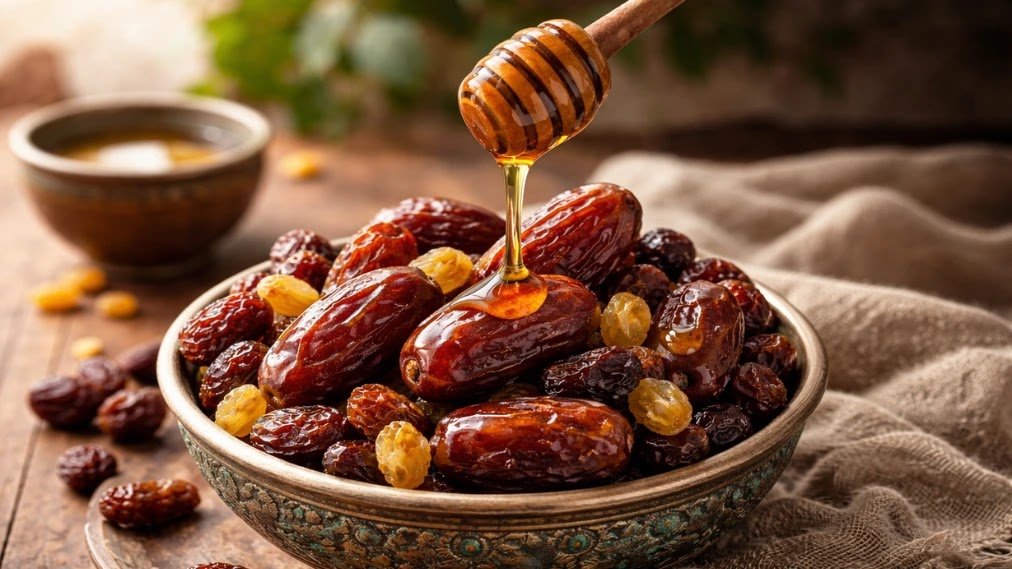
Dates and honey. Seriously. Dates are loaded with iron, fiber, and minerals. Two or three dates with a spoonful of raw honey gives you a snack that actually supports your hemoglobin. Pair it with a glass of orange juice (vitamin C alert!), and you’ve got yourself a little iron-absorption powerhouse.
The Beetroot Approach:
Fresh beetroot juice mixed with a teaspoon of honey and a splash of lemon juice. Beetroot has always been used in anemia home remedies—probably because it contains iron and folate. The lemon adds vitamin C, and the honey makes it taste less like you’re drinking liquid dirt. Drink it fresh, on an empty stomach if you can tolerate it, about 3-4 times a week.
The Amla (Indian Gooseberry) Game-Changer:
Amla is basically nature’s vitamin C supplement. Real research shows that when adolescent girls with low hemoglobin combined amla juice with honey, their levels improved noticeably within about three weeks. The combination is that effective. You can find fresh amla, dried amla powder, or amla juice at Indian groceries or online. Mix one tablespoon of amla juice with a teaspoon of honey, ideally first thing in the morning.
Honey With Lemon Water for Iron Absorption:
Simple, but effective. Sounds like a soothing morning ritual The vitamin C from the lemon enhances iron absorption from whatever else you’re eating that day. It’s not going to single-handedly cure anemia, but it’s a gentle daily practice that supports the process.
Sesame and Honey Laddoos:
This is a traditional Indian sweet that’s actually functional food. Black sesame seeds are iron-rich; honey provides energy and minerals. Roll them into bite-sized balls and have one or two as a snack. It’s indulgent-tasting but genuinely supportive of your iron status.
How Long Does It Actually Take? The Reality Check
How long does it take to see changes in hemoglobin with honey-based home remedies?
Here’s the honest answer: it depends. Studies using honey combined with other interventions (like amla juice) show measurable changes in hemoglobin within 2-4 weeks. But—and this is a big but—that’s when you’re also eating iron-rich foods consistently and following a proper protocol.
If you’re just adding a spoonful of honey to your diet and hoping for miracles? You might be waiting forever.
Think of it like fitness. One workout won’t change your body. But consistent exercise combined with proper nutrition? That works. Same principle here.
Most people see noticeable energy improvements within 2-3 weeks if they’re:
- Eating iron-rich foods daily
- Pairing them with vitamin C sources
- Using honey intentionally (not just randomly)
- Getting enough sleep and managing stress
But here’s what’s important: you should be checking your hemoglobin levels with your doctor. Don’t just guess based on how you feel. Fatigue can have tons of causes, and you want to know if you’re actually improving.
What About Different Types of Honey? Does It Matter?

Which type of honey (dark honey, forest honey, black honey, sidr honey) is best for anemia?
Yes, the type of honey matters—but maybe not in the way you think.
Dark, raw honey (forest honey, wildflower honey, buckwheat honey) contains more minerals than light, processed honey. That’s just chemistry. The darker the honey, the more contact it had with pollen and plant materials, and the more minerals it’s picked up.
So if you’re choosing between regular honey from the grocery store and raw, dark forest honey from a farmers market? The dark stuff is the better choice. But we’re not talking about a massive difference in iron content. You’re splitting hairs over “trace amount” vs “a bit more of a trace amount”
What matters way more is that you’re buying pure honey—not the stuff that’s mostly high-fructose corn syrup masquerading as honey. Check the label. It should say “100% honey” or “raw honey.” If it doesn’t, you’re getting robbed of whatever mineral content it actually has.
Can Honey Alone Cure Anemia? (Spoiler: No)
Can honey alone cure iron deficiency anemia, or do I still need iron tablets and medical treatment?
This is the question everyone wants answered, and I’m going to be straight with you: honey cannot cure iron deficiency anemia. Full stop.
What honey can do:
- Provide trace minerals
- Make iron-rich foods taste better (so you actually eat them)
- Offer antioxidants that support overall health
- Work as a natural vehicle for vitamin C
- Support your hemoglobin over time when combined with proper nutrition
What honey cannot do:
- Replace prescribed iron supplements
- Reverse severe anemia on its own
- Work quickly enough for serious deficiency
- Fix underlying causes (heavy periods, chronic bleeding, malabsorption issues)
Here’s why: iron deficiency anemia is a medical condition. If you’ve been diagnosed by a doctor, you have a reason for that diagnosis. Maybe you’re menstruating heavily. Maybe you have a GI issue that’s preventing absorption. Maybe you’re vegetarian and haven’t been eating enough iron-rich plant foods. Whatever the cause, honey isn’t addressing it.
This is crucial: if your doctor prescribed iron tablets or iron supplements, take them. Honey and home remedies are supplemental—they work alongside medical treatment, not instead of it. Think of honey as the supporting actor that makes the lead actor (your iron supplements) shine.
The Special Cases: Diabetes, Pregnancy, and Medication Interactions
Is honey safe for people with diabetes who also have iron deficiency?
This is a really important question because these two conditions actually coexist pretty often.
If you have diabetes, honey is not off-limits, but it requires careful attention. Honey does raise blood sugar—it’s mainly glucose and fructose, after all. The glycemic index of honey is around 58, which is moderate but still meaningful if you’re managing diabetes.
The strategy here:
- Use honey sparingly (a teaspoon, not a tablespoon)
- Always pair it with protein or fat to slow absorption
- Monitor your blood sugar response
- Talk to your doctor or dietitian about appropriate amounts for your specific situation
- Consider alternative sweeteners for some applications (like lemon water)
For pregnant women: Iron deficiency during pregnancy is serious—your body needs way more iron to support blood volume expansion and fetal development. Honey can definitely be part of an iron-supporting diet, but it’s not a replacement for prenatal supplements and medical monitoring. This is especially important because pregnancy-related anemia can affect both mom and baby.
Honey + dates + vitamin C foods can support your iron levels during pregnancy, but only under medical supervision. Period.
Side Effects and Safety: What You Actually Need to Know
Are there any side effects of using honey regularly for iron deficiency (weight, teeth, blood sugar)?
Let’s talk about the real potential issues:
Weight Gain: Honey is calorie-dense. A tablespoon is about 60 calories. If you’re mindlessly adding honey to everything, yeah, you might notice your scale creeping up. But if you’re being intentional—using it as a vehicle for iron-rich foods instead of eating extra snacks—it’s not a problem.
Dental Health: This one’s legit. Honey is sticky and contains sugars, which means it can contribute to tooth decay if you’re not careful. Take it straight, then rinse your mouth or drink water. Don’t sip honey mixed into tea for hours.
Blood Sugar Spikes: For people with diabetes or prediabetes, honey can cause blood sugar elevation. This is especially true if you take it on an empty stomach. Pair it with other foods when possible.
Allergies: Raw honey, especially local raw honey, can contain pollen that triggers allergies in sensitive people. If you’re allergic to pollen, raw honey might not be your friend. Start with small amounts and see how you react.
Botulism Risk (Babies Only): Never give honey to babies under one year old. Their digestive systems can’t handle it. This doesn’t apply to kids or adults, but it’s important to mention.
The bottom line? For most healthy adults, honey is safe. Just don’t treat it like it has no calories or sugars, and don’t expect it to work miracles on its own.
Iron Gummies for Women with W.H.O. Recommended SunActive Fe

The Vitamin C Factor: Why It’s Actually the MVP Here
I keep mentioning vitamin C, and there’s a reason. It’s genuinely important to understand this because it changes how you approach iron-rich eating.
Your body has a much easier time absorbing iron from animal sources (heme iron) than from plant sources (non-heme iron). Since honey is vegan and plant-based, any iron it contains is non-heme iron, which is absorbed at lower rates.
But here’s the magic: vitamin C dramatically increases non-heme iron absorption. We’re talking about increasing it by up to 3-4 times. That’s not a small difference.
So when you combine:
- Honey with iron-rich foods
- Plus vitamin C sources (citrus, guava, berries, tomatoes, peppers)
- Plus some dietary fat (which helps nutrient absorption)
You’ve created an actual formula for supporting your iron status.
Foods with the Best Vitamin C Content:
- Oranges and lemons (especially fresh juice)
- Guava (insanely high in vitamin C)
- Kiwis
- Strawberries
- Bell peppers
- Broccoli
- Tomatoes
Pair any iron-rich food with these, add a touch of honey for palatability if you want, and you’ve got a legitimate iron-supporting meal.
Honey vs. Other “Natural” Alternatives: How Does It Stack Up?
You’ve probably also heard about jaggery and blackstrap molasses as iron alternatives. Let’s compare:
| Option | Iron Content | Best For | Downsides |
|---|---|---|---|
| Honey | Trace amounts | Pairing with other foods, vitamin C absorption, taste | Low iron on its own |
| Jaggery | Slightly higher than honey | Traditional remedies, similar applications | Still relatively low, less research support |
| Blackstrap Molasses | Actually significant (around 3mg per tablespoon) | If you need actual iron content | Strong taste, not suitable for all recipes, higher sugar |
| Iron Supplements | Therapeutic doses (300mg+ in divided doses) | Treating actual deficiency | Can cause side effects, requires medical supervision |
Here’s the truth: if you’re comparing honey to blackstrap molasses, molasses wins on iron content. If you’re comparing either to prescribed iron supplements, there’s no contest—supplements deliver doses calibrated to actually treat deficiency.
Honey’s real advantage is that it tastes good and makes you more likely to eat the other iron-rich foods you’re combining it with.
How to Build an Actual Iron-Supporting Routine (Not Just Honey)
Okay, so honey is useful but not magical. How do you actually build a daily routine that supports your iron levels?
Step 1: Get a Baseline
See your doctor. Get your hemoglobin, ferritin, and serum iron tested. You need to know where you’re starting.
Step 2: Identify the Iron-Rich Foods You Actually Like
Don’t force yourself to eat lentils if you hate them. Iron comes from lots of sources:
- Red meat and poultry (heme iron—easily absorbed)
- Lentils, beans, and chickpeas
- Dark leafy greens (spinach, kale)
- Seeds (pumpkin, sesame, sunflower)
- Dried fruits (dates, raisins, figs)
- Fortified cereals and breads
Step 3: Pair Them With Vitamin C
Eating an iron source? Have citrus nearby. Drinking water with lemon? Perfect. Having a bell pepper with your lunch? Excellent.
Step 4: Add Honey Intentionally
Not everywhere, but where it makes sense:
- Stir into yogurt with berries
- Drizzle over dates and nuts
- Mix into lemon water
- Use in homemade granola bars with seeds and dried fruit
Step 5: Track and Retest
After 6-8 weeks, get your levels tested again. This tells you if your approach is working or if you need medical intervention.
The Medical Reality: When Honey Isn’t Enough
Doctor advice on using honey for iron deficiency: Most doctors won’t tell you honey is useless, but they also won’t tell you it’s a treatment. Here’s what evidence-based medical care looks like:
If you have iron deficiency anemia diagnosed by blood tests, your doctor will typically:
- Investigate the cause. Why are you deficient? Heavy periods? Chronic bleeding? Malabsorption? The cause determines the treatment.
- Prescribe iron supplements if needed. Standard therapy is oral ferrous salts in doses much higher than any food can provide.
- Recommend dietary changes. More iron-rich foods, paired with vitamin C.
- Potentially investigate further if it’s not resolving. Sometimes there’s an underlying condition that needs addressing.
Honey can absolutely be part of step 3, but it’s not replacing steps 1 or 2.
Red flags where you definitely need medical care (not just honey):
- Severe fatigue affecting daily function
- Shortness of breath with normal activity
- Chest pain or heart palpitations
- Pale skin and pale inside lower eyelids
- Persistent symptoms despite home remedies
- Rapid or irregular heartbeat
These aren’t “try honey and see what happens” symptoms. These are “see a doctor immediately” symptoms.
Research on Honey and Hemoglobin: What Studies Actually Show
Research on honey and hemoglobin in pregnant women and adolescents shows some genuinely interesting results—with important caveats.
Several studies from India and other regions examined interventions combining honey with iron-rich foods (especially amla) in anemic adolescent girls and pregnant women. Key findings:
- Honey + amla juice showed measurable hemoglobin improvements within 3-4 weeks
- Effects were better when combined with dietary counseling and consistent daily use
- Improvements were modest but clinically meaningful (raising hemoglobin by 0.5-1.5 g/dL)
- No serious side effects reported in these populations
Important context: These weren’t comparing honey alone to nothing. They were testing honey as part of a comprehensive dietary intervention. That’s the honest framing.
The research also shows honey’s most likely mechanism isn’t that it’s a miracle iron source—it’s that:
- It improves palatability of iron-rich foods
- It may enhance absorption when paired with vitamin C foods
- It provides consistent daily use because people enjoy it
- It contains some antioxidants that support overall health
None of this is earth-shattering, but it’s real.
The Mineral Content of Honey: What’s Actually In There?
Honey’s mineral content (iron, copper, manganese) and blood health is worth understanding beyond just iron.
Raw honey contains:
- Iron: 0.3-0.5 mg per 100g (about 0.04-0.06mg per tablespoon)
- Copper: 0.05-0.15 mg per 100g (supports iron metabolism)
- Manganese: 0.05-0.3 mg per 100g (cofactor for enzymes)
- Zinc: Trace amounts
- Magnesium: Trace amounts
- Various antioxidants: Flavonoids, phenolic acids (varies by honey type)
For reference, the daily iron requirement for an adult woman is 18mg (8mg for men over 50), and for pregnancy it’s 27mg. A tablespoon of honey isn’t making a meaningful dent in that.
But copper and manganese? These minerals actually do support iron metabolism and hemoglobin formation. So while the iron content is modest, honey contains supporting minerals that make the iron-rich foods you pair it with more effective. It’s a synergy thing.
Building Your Hemoglobin-Supporting Lifestyle Beyond Honey
Real talk: iron status is affected by way more than just food. If you want to actually improve your hemoglobin, here’s what matters:
Sleep Quality:
Your body builds red blood cells during deep sleep. If you’re chronically sleep-deprived, no amount of honey and dates is going to fix it. Aim for 7-9 hours, consistently.
Stress Management
Chronic stress raises cortisol, which impairs nutrient absorption and suppresses red blood cell production. Meditation, yoga, or whatever stress management works for you is actually part of treating anemia.
Light Exercise
This might sound counterintuitive, but regular moderate exercise (not extreme training) stimulates red blood cell production. Walking, yoga, swimming—these all help.
Gut Health
If you can’t absorb nutrients efficiently, it doesn’t matter how much iron you’re eating. Consider whether you have underlying digestive issues (celiac, IBS, etc.) that might be preventing absorption.
Supplemental Support
Beyond food, consider whether you need additional supplements. B12, folate, and vitamin D all affect hemoglobin. If you’re vegan, B12 is almost certainly an issue.
Home Remedies Using Honey and Dry Fruits: A Practical Recipe
Home remedies for anemia using honey and dry fruits can look like this:
The “Iron Booster Laddoo” (Energy Balls)
Ingredients:
- 15-20 dates (pitted)
- 10-15 raisins
- 5-6 dried figs
- 2 tablespoons raw honey
- 2 tablespoons crushed black sesame seeds
- 1 tablespoon cocoa powder (optional, for antioxidants)
- Pinch of cardamom powder
Method:
- Soak dates in warm water for 10 minutes to soften
- Blend dates, raisins, and figs into a smooth paste
- Add sesame seeds, cocoa powder, cardamom
- Mix in honey
- Roll into walnut-sized balls
- Store in an airtight container
When to eat: One ball every morning with orange juice or warm lemon water
Why it works: Every ingredient is iron-rich or enhances absorption. The vitamin C in orange juice makes the iron bioavailable. The honey makes it taste like a treat, not medicine.
Tata 1mg Tejasya Organic Moringa Powder

Tata 1mg Tejasya Organic Moringa Powder a superfood formula that naturally supports overall nutrient absorption, immunity, energy boost, and general wellness.
Click here to explore this natural superfood formula that supports energy & wellness — a great addition to your iron-boosting routine! Check price on Amazon.
The Bottom Line: Smart Expectations for Honey and Iron Deficiency
Let’s circle back to where we started: Can honey help reduce iron deficiency?
Yes. But with massive qualifications:
✅ Honey contains trace minerals that support blood health
✅ Honey pairs beautifully with iron-rich foods and vitamin C
✅ Honey improves palatability, increasing compliance with dietary changes
✅ Honey contains antioxidants that support overall health
✅ Research shows honey works as part of comprehensive dietary interventions
❌ Honey cannot cure iron deficiency anemia
❌ Honey is not a replacement for medical treatment
❌ Honey alone won’t restore low hemoglobin
❌ Honey isn’t a quick fix for a medical condition
❌ Honey might not be appropriate for everyone (diabetics, people with certain allergies)
The honest truth? Honey is a useful tool in a comprehensive approach to iron health. It’s not the hero—it’s the sidekick that makes everything else more effective. The hero is proper nutrition, medical care, adequate sleep, and stress management.
If you’ve been diagnosed with iron deficiency anemia, absolutely incorporate honey and iron-rich foods into your diet. But also:
- See your doctor regularly
- Take prescribed supplements if recommended
- Get your levels retested
- Identify and address the underlying cause
- Understand that this is a medical condition that requires medical oversight
Medical & Affiliate Disclaimer
The information provided on this website is for educational and informational purposes only and is not intended as medical advice. It does not replace professional medical consultation, diagnosis, or treatment. Always seek the guidance of a qualified healthcare professional before making any changes to your diet, exercise routine, lifestyle, or before using any supplements, programs, or health-related products mentioned on this site.
Some links in this article may be affiliate links, which means we may earn a small commission if you make a purchase through these links at no additional cost to you. This helps support our website and allows us to continue providing helpful, research-based content. We only recommend products and services that we believe may offer value to our readers.
Individual results may vary, and no specific health outcomes are guaranteed.
Final Thoughts: Your Iron Story Matters
Iron deficiency isn’t a character flaw. It’s not something to be embarrassed about. It affects millions of people, and the good news is that it’s fixable.
Honey can be part of your fix. So can dates and amla and lemon water and sleep and stress management and actual medical care. It’s the whole picture that matters, not any single ingredient.
Start with your doctor. Get tested. Get a plan. And if honey and iron-rich foods are part of that plan, great—they absolutely can be. Just go in with realistic expectations and genuine understanding of what honey can and can’t do.
Your body’s oxygen delivery system is too important to leave to guesswork.
Frequently Asked Questions About Honey and Iron Deficiency
Q: Can I take honey and iron supplements together?
A: Yes, absolutely. They work in different ways and at different speeds. Iron supplements deliver therapeutic doses; honey supports absorption and adds complementary minerals. No interaction issues.
Q: How much honey should I take daily for iron deficiency?
A: 1-2 teaspoons daily as part of meals or with iron-rich foods. More isn’t better—honey isn’t medicine with a therapeutic dose.
Q: Is raw honey better than regular honey for iron deficiency?
A: Raw honey has slightly higher mineral content, but the difference is modest. Pure honey matters more than raw vs. processed.
Q: Can children take honey for iron deficiency?
A: Yes, children over one year. Honey has been studied in adolescent anemia with positive results. But medical supervision is important—don’t self-treat children’s anemia.
Q: Does heating honey destroy the minerals and antioxidants?
A: Partially. High heat can degrade some compounds. Add honey after cooking when possible, or use it raw in foods, juices, and water.
Q: What if honey doesn’t seem to be helping?
A: Retest your levels. Adjust your diet. Consider whether there’s an underlying cause your doctor hasn’t addressed. Sometimes iron supplements are genuinely necessary.
Q: Is there an “anemia honey” that’s specifically formulated?
A: Not really—there’s no clinical honey specially designed for anemia. Regular raw honey combined with iron-rich foods is your best bet.
Q: How long until honey makes a difference?
A: 4-6 weeks if you’re consistent and eating properly. Longer if you’re just adding it casually. Blood tests at 8 weeks will show if it’s working.
Q: Can I use honey instead of iron supplements during pregnancy?
A: No. Pregnancy requires higher iron intake than food alone can typically provide. Honey + supplements + diet is the right approach.
Q: What if I’m allergic to honey?
A: Skip it. Use other sweeteners and focus on iron-rich foods paired with vitamin C. Allergy matters more than any benefits.
Authority Bio:
Hi, I’m MACHHINDRA Jadhav — a passionate Health Content Writer with 4+ years of experience in the health and wellness space. I specialize in breaking down complex topics like Disease & Conditions, Fitness, Mental Health, and Nutrition into simple, practical advice you can actually use in your daily life.
My goal is not just to inform, but to empower you to take control of your health naturally and confidently. Every article I write is backed by research, real insights, and a deep commitment to helping people live healthier, stronger, and more balanced lives.
If you’re looking for clear, honest, and actionable health guidance — you’re in the right place.
References
- National Institute of Diabetes and Digestive and Kidney Diseases (NIDDK)
- Mayo Clinic
- World Health Organization (WHO)