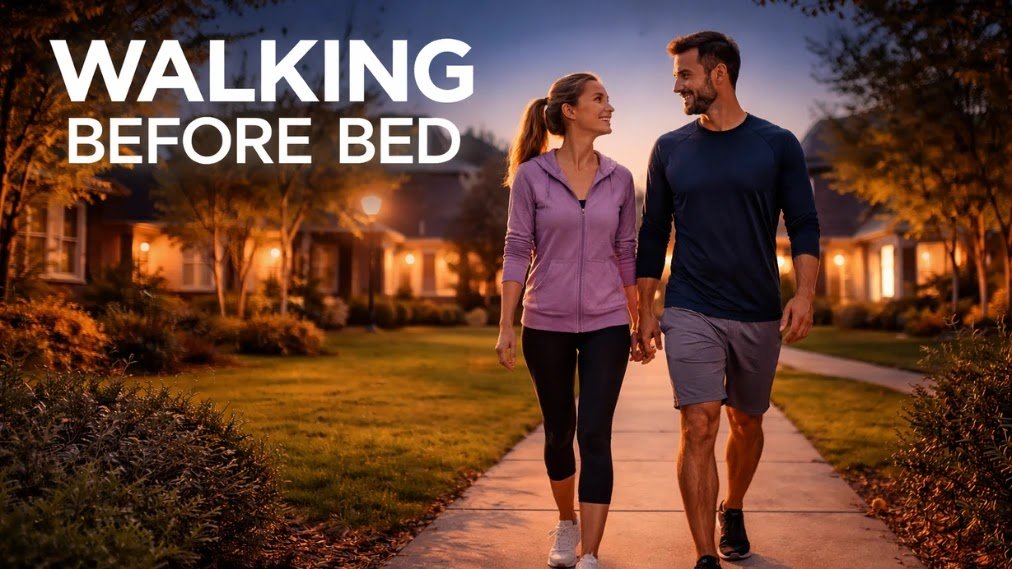
Discover how walking before bed deepens sleep quality. Learn optimal timing, duration, pace, and science-backed benefits for better rest and stress relief.

Affiliate Disclosure:
This article contains affiliate links, including Amazon affiliate links. This means that if you click on a product link and make a purchase, I may earn a small commission at no extra cost to you. These commissions help support this website and allow me to continue creating helpful, well-researched content for readers.
I only recommend products that I genuinely believe are useful and relevant for improving health, comfort, and productivity for users. All opinions expressed in this article are my own.
That Restless 11 PM Feeling—And What Actually Fixes It
You know the feeling. It’s 10:47 p.m., you’re lying in bed, your mind is racing through tomorrow’s email chain, and sleep feels approximately three states away. You’ve tried everything—the white noise machine, the meditation app, the weighted blanket situation. What you haven’t tried? A simple walk.
I get it. The instinct is to stay still, to conserve energy, to will yourself into unconsciousness. But here’s what the sleep science actually says: walking before bed is one of the most underrated tools for deeper, more restorative sleep. Not a sprint. Not an intense workout. A gentle, intentional walk—the kind that takes you around your neighborhood, through your house, or even just on your porch.
This isn’t new age wellness nonsense. This is your circadian rhythm actually working the way evolution designed it to.
Does Walking Before Bed Actually Improve Sleep Quality?
Short answer: yes, genuinely. But let me explain why, because the mechanism is actually fascinating.
Evening stroll sleep benefits work through multiple pathways. First, there’s the physical one. When you move your body—even gently—you increase blood flow and lower your core body temperature gradually over the next hour or so. This temperature drop is exactly the signal your body needs to trigger sleep onset. Your body doesn’t fall asleep randomly. It falls asleep when your core temp drops about 2-3 degrees from your daytime baseline.
Walking before bed for deeper sleep also regulates your circadian rhythm. Your body’s internal clock responds to both light and movement. An evening walk tells your system, “Okay, we’re winding down. Prepare for sleep mode.” This is especially powerful if you take your walk outside where there’s natural light exposure—even in the evening, outdoor light signals your brain to start tapering melatonin production.
Then there’s the neurochemical piece. Walking releases endorphins and reduces cortisol (your stress hormone). You’re essentially pharmacologically preparing your body for sleep through movement. No prescription required.
Can walking before bed help with stress and anxiety? Absolutely. Most people don’t sleep terribly because they’re exhausted. They sleep terribly because they’re anxious. A stress relief walk bedtime session short-circuits that anxiety loop. You’re moving, you’re breathing, you’re processing the day. By the time you hit your pillow, your nervous system has actually calmed down rather than wound tighter.
How Long Should I Walk Before Bed for Better Sleep?
This is where a lot of people overthink it.
How long should I walk before bed for better sleep? For most people, 20-30 minutes is the sweet spot. Long enough to trigger the physiological changes we just discussed. Short enough that you’re not so stimulated by endorphins that you’re wired when you get into bed.
Is a 30-minute walk before bedtime too much? Not really, but individual variation matters. Some people feel great after 30 minutes. Others find anything longer than 20 minutes keeps them too alert. The key is listening to your body. The goal isn’t to exhaust yourself. The goal is gentle movement toward sleep.
Think of it this way: you’re not training for a half marathon. You’re decompressing from a day.
What time before bed is ideal for walking? Timing depends on your sleep schedule, but most sleep science suggests finishing your walk 30-60 minutes before bed. This gives your body time to cool down and shift into sleep mode. If you’re in bed by 10:30 p.m., aim to finish your walk by 9:30 p.m. If you walk too close to bedtime, you might still feel the endorphin buzz when your head hits the pillow.
That said, some people sleep better with a gentle walk bedtime routine even closer to sleep. Again, personal experimentation matters more than rigid rules.
M6 Fitness Tracker Smart Band [𝟏𝟓 𝐘𝐄𝐀𝐑𝐒 𝐖𝐀𝐑𝐑𝐀𝐍𝐓𝐘]
![M6 Fitness Tracker Smart Band [𝟏𝟓 𝐘𝐄𝐀𝐑𝐒 𝐖𝐀𝐑𝐑𝐀𝐍𝐓𝐘]](https://blogger.googleusercontent.com/img/b/R29vZ2xl/AVvXsEjI2WyXkbSzfAtLW9EPmVYV4nra_eMEgck-FWSRCPfrYqbKrRmygQoYiU5yvw7hxHsDJ2IIgj7HEBmdiNhYXua4d1yvAvGNN0JWmb6-X8gsgtxwBhZjf-J7o2jYbQaU2BrLDVFhjdv3FJanSy7SjvLOj7xbSUmRnmH4GiSAvSYZw2vP8DWxC0C6vHkjqrw/s1200/M6%20Fitness%20Tracker%20Smart%20Band.webp "M6 Fitness Tracker Smart Band [𝟏𝟓 𝐘𝐄𝐀𝐑𝐒 𝐖𝐀𝐑𝐑𝐀𝐍𝐓𝐘]")
The Pace Question: Slower Is Actually Smarter
What pace is best for walking before bed?
Here’s where the conventional wisdom gets it wrong. You don’t want to race-walk. You don’t want to go hard enough that your heart rate spikes and adrenaline kicks in.
A moderate walk evening rest is ideal. We’re talking 2.5-3.5 mph—basically a leisurely stroll where you could comfortably hold a conversation. The pace should feel relaxing, not challenging. You should be able to breathe normally, to notice your surroundings, to let your mind wander.
This is the opposite of morning exercise. A light exercise before bed sleep routine prioritizes gentleness over intensity. This is where a quality walking shoe matters—something cushioned and supportive like Brooks Ghost 17 or Hoka Clifton 10 that lets you move without foot pain distracting you from the whole point.
Walking circadian rhythm optimization happens best when you’re calm and intentional, not rushing or pushing.
What About Digestion? The Walking After Dinner Sleep Connection

Here’s a practical question I get a lot: How does walking before bed affect digestion and sleep?
If you eat dinner at 6 or 7 p.m., a short walk after dinner is genuinely helpful. Walking after dinner sleep quality actually improves because light movement aids digestion, stabilizes blood sugar, and prevents that post-meal energy crash that makes quality sleep harder. You’re not walking immediately after eating—that can cause discomfort—but a 20-minute walk 30-45 minutes after dinner? That’s strategic.
Does walking before bed aid weight loss and sleep? Yes, actually. The digestion component means your body isn’t working overtime trying to process food while you’re trying to sleep. Plus, the better sleep you get from pre-sleep walking tips, the better your metabolism functions overall. Better sleep means better hormonal balance, which means less midnight snacking urges and better decision-making the next day.
It’s interconnected. Everything affects everything.
The Real Talk: Potential Risks and When to Be Cautious
I won’t pretend there are no considerations.
Can walking right before sleep cause problems? Not typically, but timing and intensity matter. If you walk so close to bedtime that you’re still in an elevated heart rate state, you might struggle to fall asleep. If you push too hard and your adrenaline is still elevated, same issue.
Are there risks to walking too close to bedtime? The main one is overstimulation. Some people are sensitive to late evening activity. If that’s you, finish your nighttime walking insomnia walk earlier, giving yourself 60-90 minutes before sleep.
There’s also the safety component. Walking after dark requires visibility. A reflective vest, a headlamp, or sticking to well-lit areas matters. Choose routes you know well and feel safe on. The goal is relaxation, not elevated alertness.
Is it safe to walk right before sleep? Yes, for the vast majority of people. But if you have any cardiac concerns or are on medications that affect blood pressure or heart rate, check with your doctor first. This is especially true if you have conditions like sleep apnea, where timing of physical activity matters.
How Walking Before Bed Helps Insomnia
Let’s talk about the people who actually need this—folks with real insomnia.
Can walking before bed help with insomnia? The evidence suggests yes, though it’s not a magic cure. Insomnia is usually multifactorial—stress, irregular sleep schedules, poor sleep hygiene, racing thoughts. A relaxing walk before sleep addresses multiple pathways simultaneously.
You’re getting movement (which tires your body). You’re decompressing mentally. You’re regulating your circadian rhythm. You’re reducing stress hormones. For mild to moderate insomnia, this combination is genuinely powerful.
For severe insomnia, you’d want professional support. But as part of a comprehensive sleep hygiene routine, pre-bed walking tips rank high on the effectiveness list.
Building Your Bedtime Walking Routine

Here’s how to actually implement this:
The Basic Framework
- Choose a time 30-60 minutes before bed
- Aim for 20-30 minutes of walking
- Go at a conversational pace (moderate walk evening rest)
- Consider outdoor routes when possible for light exposure
- Finish with some deep breathing before bed
Make It Comfortable
Quality footwear matters more than you’d think. Your feet should feel supported and cushioned—this isn’t the time for fashion over function. Brooks Ghost 17, Hoka Clifton 10, or Asics Gel-Nimbus 27 all excel at the comfort-for-gentle-walking category.
Wear breathable clothing. You’re not going to overheat on a 20-minute walk, but you don’t want to feel restricted. Think comfortable, casual—the opposite of gym wear.
The Tech and Tracking Angle (If You’re Into That)
Some people find that tracking their daily evening walk sleep quality helps with accountability. A Fitbit Charge 6 monitors your walk, then automatically tracks your sleep afterward, showing you whether your evening stroll correlates with better sleep metrics.
For deeper insight, an Oura Ring Gen 4 goes further, monitoring sleep stages and recovery status post-walk, giving you actual data on whether your bedtime walk is translating to REM and deep sleep gains.
If you want post-walk muscle relief to facilitate better sleep, a Therabody Theragun Mini addresses any tightness before bed.
And if you’re someone who struggles with racing thoughts during your walk, a lavender sleep spray or valerian root supplement post-walk can complement your gentle walk bedtime routine nicely.
Creating the Full Sleep Environment
Here’s where walking before bed fits into your larger sleep architecture:
| Sleep Component | Why It Matters | Integration with Walking |
|---|---|---|
| Circadian Rhythm | Regulates sleep timing | Evening walk resets rhythm |
| Temperature Drop | Triggers sleep onset | Walking cools core temp |
| Stress Reduction | Lowers anxiety barriers | Walking reduces cortisol |
| Physical Fatigue | Enables deep sleep | Gentle movement tires body |
| Mental Clarity | Clears racing thoughts | Walking processes the day |
| Digestion | Prevents sleep disruption | Post-dinner walk aids it |
The Unexpected Benefits Nobody Mentions
Beyond sleep, a consistent evening walk sleep practice shifts something larger. You get unstructured thinking time. You process emotions. You solve problems you’d been stuck on. Your nervous system genuinely downregulates.
People report that their 30 minute walk before bed becomes the part of their day they actually look forward to. Not because it’s intense or achievement-oriented, but because it’s theirs. It’s uncompromised time before sleep demands.
That psychological component? It matters for sleep quality more than we typically acknowledge.
Your Sleep Starts Before Bed
Here’s the truth nobody wants to hear: great sleep isn’t built at 10 p.m. It’s built throughout the day through a thousand small choices. But if you could implement one single habit that moves the needle on sleep quality, walking before bed for deeper sleep is genuinely top tier.
Not because it’s trendy. Not because wellness influencers say so. But because it works. Because your body responds to it. Because you’ll feel it immediately.
Start small. Walk tomorrow evening. 20 minutes, moderate pace. Notice how you feel when you get into bed. Notice whether you fall asleep faster. Notice the quality of your sleep.
Then decide whether this becomes your nightly ritual.
Aromatherapy Essential Oil (Lavender)
.webp "Aromatherapy Essential Oil (Lavender)")
Quick FAQ Reference
Q: Can I do a 10-minute walk or does it need to be longer?
A: 10 minutes is better than nothing, but 20-30 minutes captures most of the benefits. Start with what you’ll actually do consistently.
Q: What if I can’t walk outside? Does indoor walking count?
A: Yes. A walk around your house, up and down stairs, or on a treadmill provides similar physiological benefits. Outdoor light exposure is nice but not required.
Q: Should I listen to music or podcasts while walking before bed?
A: Keep it low-key. Upbeat music defeats the purpose. Calming audio or silence is better for the wind-down vibe.
Q: What if I live somewhere it’s not safe to walk at night?
A: Your safety comes first. Walk during early evening while still light, on a treadmill, or find a safe indoor location. The principle remains the same.
Q: How quickly will I notice sleep improvement?
A: Some people feel better the first night. Most notice consistent improvement within a week of nightly walks.
Authority Bio:
Hi, I’m MACHHINDRA Jadhav — a passionate Health Content Writer with 4+ years of experience in the health and wellness space. I specialize in breaking down complex topics like Disease & Conditions, Fitness, Mental Health, and Nutrition into simple, practical advice you can actually use in your daily life.
My goal is not just to inform, but to empower you to take control of your health naturally and confidently. Every article I write is backed by research, real insights, and a deep commitment to helping people live healthier, stronger, and more balanced lives.
If you’re looking for clear, honest, and actionable health guidance — you’re in the right place.